


Why Steel Thickness is Critical for Solar Street Light Poles
Solar Street Light Poles
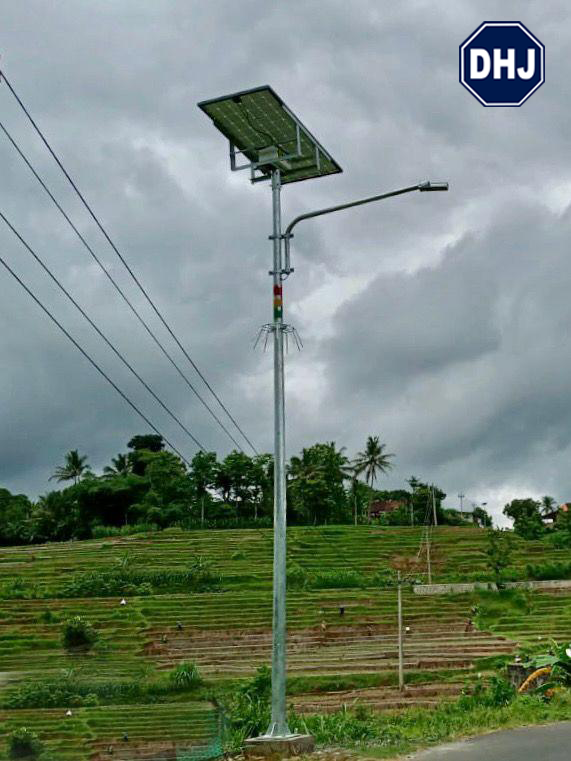
Solar street light poles are the backbone of any renewable energy lighting system. Beyond just the quality of the material, the thickness of the steel is a critical factor that determines the pole's strength, stability, and lifespan.
Using steel that is too thin or not up to spec can compromise the entire system and, more importantly, pose a serious safety risk to the public. Understanding this relationship is essential for anyone involved in planning or installing solar lighting projects.
Why Steel Thickness Matters
The thickness of the steel isn't just a technical detail; it serves several vital functions:
Supporting Weight: It holds up the solar panels, LED lamps, and heavy battery boxes.
Weather Resistance: It withstands wind pressure and constant vibrations.
Structural Stability: It ensures the pole remains upright and steady over time.
Damage Prevention: It prevents the pole from bending or breaking under stress.
The Connection Between Thickness and Performance
1. Handling Static and Dynamic Loads
Solar poles must endure static loads (the constant weight of the components) and dynamic loads (changing forces like wind and storms). Thicker steel has a much higher load-bearing capacity. If the steel is too thin, the pole is prone to:
Bending or warping.
Developing structural cracks.
Total structural failure.
2. Wind Stability
Solar panels act like "sails" because of their large surface area. When high winds hit, they create significant force at the top of the pole. Adequate steel thickness provides the necessary stiffness to resist this "push," keeping the pole perfectly vertical.
3. Longevity and Durability
Thicker steel generally lasts longer because it is more resilient against:
Corrosion: It takes much longer for rust to compromise a thick wall than a thin one.
Wear and Tear: Better resistance to environmental degradation.
Material Fatigue: It stays strong even after years of facing the elements.
4. Safety First
At the end of the day, structural integrity is about safety. A pole that fails due to improper thickness isn't just a financial loss—it’s a hazard that can cause accidents on public roads.
5. Long-Term Cost Efficiency
While thicker steel might mean a slightly higher upfront cost, it pays for itself in the long run through:
Lower risk of expensive damage.
Reduced maintenance needs.
A significantly longer service life.
The Risks of Cutting Corners
Choosing "sub-standard" or thinner steel to save money often leads to:
Weakened structural integrity.
Premature failure (the pole may need replacing in just a few years).
Higher long-term maintenance costs.
Public safety liabilities.
Conclusion
Steel thickness is a foundational element of a reliable solar street light system. By choosing the right thickness based on technical standards and environmental conditions, you ensure that your lighting project is strong, stable, safe, and sustainable.
Head Office
Jakarta Industrial Estate Pulogadung (JIEP)
Jl. Rawa Gelam 3, Blok. M No. 6, Jatinegara, Cakung, East Jakarta - 13930
Telp : +6221 – 460 1088
Fax : +6221 – 4682 3636
Email : info@dutahitajaya.co.id
© 2026. All rights reserved.
Fabrication Plants
Plant Tambun
Jl. Kampung Bulu No.29, Setiamekar, Tambun Selatan, Kab. Bekasi
West Java - 17510
Plant Setu
Jl. Raya Setu No. 09, Telajung, Cikarang Barat, Kab. Bekasi
Plant Cileungsi
Jl. Raya Narogong KM 24.5, Klapanunggal, Cileungsi, Kab. Bogor
West Java - 16820
Plant Cikarang
Jababeka II Industrial Plant, Jl. Industri selatan VIII, Block EE-7H, Pasirsari, Cikarang Selatan, Kab. Bekasi
West Java - 17534
Galvanize Plant
Our Instagram
West Java - 17530