


Why Don’t Cranes Easily Tip Over When Lifting Heavy Loads?
Crane
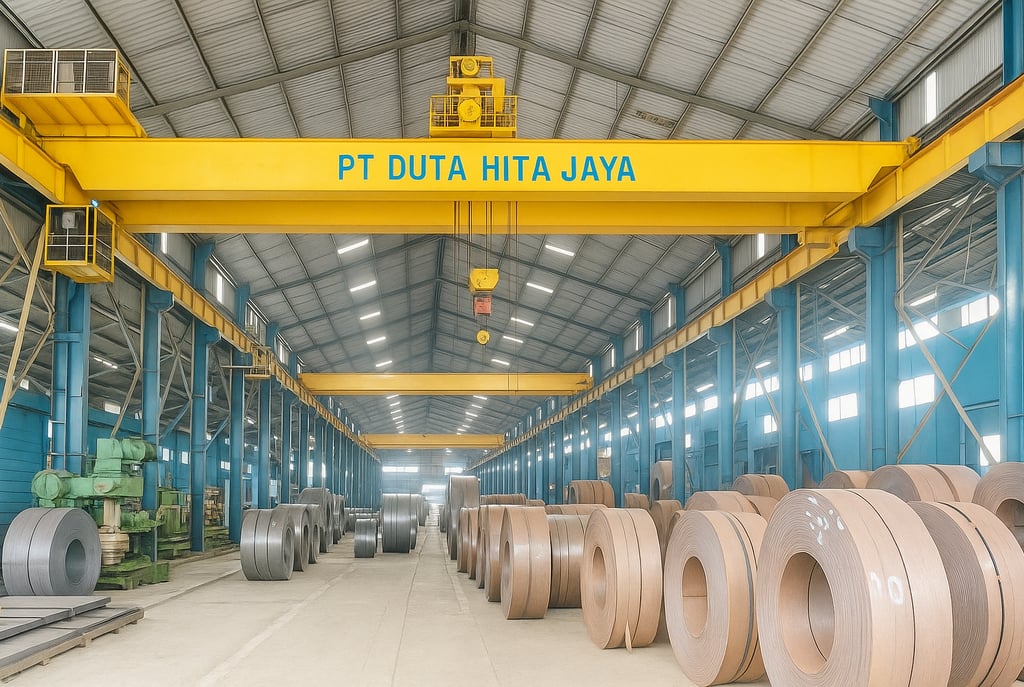
When people see a crane lifting steel structures, precast concrete, or machinery weighing tens to hundreds of tons, a common question arises: why doesn’t the crane tip over when lifting such massive loads?
The answer lies in a combination of well-engineered design, balance systems, modern technology, and strict operating procedures. A crane is not just a lifting device—it is the result of precise engineering calculations designed to maintain maximum stability.
Counterweight System (Balancing Weight)
One of the main reasons cranes don’t tip over is the use of counterweights at the rear of the crane.
When a crane lifts a load at the front, the counterweight balances the force so the crane’s center of gravity remains stable. Without this system, the crane could lose balance and risk tipping over.
In large cranes such as mobile cranes, the counterweight can be added or removed depending on the lifting capacity required for a particular project.
High-Strength Steel Structure
Modern cranes are built from high-strength steel designed to withstand enormous pressure without bending or breaking.
Their structural designs undergo simulations and load testing before being used in real projects. For example, crawler cranes use a lattice boom structure (a triangular frame design) that distributes loads more evenly, making the crane more stable when lifting heavy objects.
Support Systems (Outriggers or Tracks)
To prevent tipping, cranes are also equipped with additional support systems.
Outriggers
These are extendable stabilizing legs that spread outward to widen the crane’s support base.
Tracks (Caterpillar Chains)
Crawler cranes use track systems that distribute weight more evenly across the ground surface.
The wider the crane’s support base, the more stable it becomes during lifting operations.
Baca Juga : Keunggulan Tower BTS Berbahan Baja Dibanding Material Lainnya
Konten ini telah tayang di Kompasiana.com dengan judul "Keunggulan Tower BTS Berbahan Baja Dibanding Material Lainnya", Klik untuk baca:
Kreator: DHJ
Kompasiana adalah platform blog. Konten ini menjadi tanggung jawab bloger dan tidak mewakili pandangan redaksi Kompas.
Tulis opini Anda seputar isu terkini di Kompasiana.com
Lift Radius and Capacity Calculations
Every crane has a load chart, which shows the safe lifting limits based on the boom angle and distance.
The farther the load is from the crane’s center (the radius), the smaller the lifting capacity becomes. Operators must follow this chart to ensure the crane stays within safe operating limits.
This is why cranes never lift loads arbitrarily—every lift follows detailed engineering calculations.
Modern Safety Technology
Today’s cranes are equipped with advanced safety systems such as:
Load Moment Indicator (LMI)
Overload Protection System
Tilt Sensors
Digital Control Systems
These technologies provide warnings and may even stop the operation if the load exceeds safe limits. With these systems, the risk of crane tipping can be prevented early.
Ground Conditions and Project Planning
Another crucial factor is ground stability. Before a crane operates, technical teams ensure the ground surface is strong enough to support the combined weight of the crane and its load.
In large construction projects using tower cranes, special foundations are often built to ensure the crane remains stable throughout the construction period.
Conclusion
Cranes do not easily tip over when lifting heavy loads because they are designed with carefully engineered balance systems, high-strength steel structures, stable support mechanisms, and modern safety technology.
As long as cranes are operated within their rated capacity and handled by trained professionals, they are extremely safe and reliable for large-scale construction and industrial projects.
Head Office
Jakarta Industrial Estate Pulogadung (JIEP)
Jl. Rawa Gelam 3, Blok. M No. 6, Jatinegara, Cakung, East Jakarta - 13930
Telp : +6221 – 460 1088
Fax : +6221 – 4682 3636
Email : info@dutahitajaya.co.id
© 2026. All rights reserved.
Fabrication Plants
Plant Tambun
Jl. Kampung Bulu No.29, Setiamekar, Tambun Selatan, Kab. Bekasi
West Java - 17510
Plant Setu
Jl. Raya Setu No. 09, Telajung, Cikarang Barat, Kab. Bekasi
Plant Cileungsi
Jl. Raya Narogong KM 24.5, Klapanunggal, Cileungsi, Kab. Bogor
West Java - 16820
Plant Cikarang
Jababeka II Industrial Plant, Jl. Industri selatan VIII, Block EE-7H, Pasirsari, Cikarang Selatan, Kab. Bekasi
West Java - 17534
Galvanize Plant
Our Instagram
West Java - 17530