

The Strategic Role of Steel in Coal-Fired Power Plant (PLTU) Construction
PLTU
Coal-Fired Power Plants (PLTU) remain one of the main pillars of large-scale electricity generation. Behind their complex systems, steel plays a critical role in ensuring structural strength, operational reliability, and long service life of the plant.
Steel as the Main Structural Element of PLTU
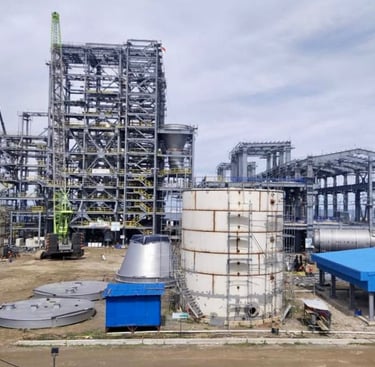
PLTU facilities rely heavily on steel structures designed to withstand extreme static and dynamic loads. Components such as main building steel frames, boiler support structures, and coal conveyor systems are predominantly made of structural steel. Steel is chosen for its high strength-to-weight ratio, allowing robust construction without excessive material mass.
In addition, steel enables modular design, making fabrication in workshops more efficient and significantly reducing installation time on site—an important factor in large-scale power plant projects.
Steel in Boiler Systems and Pressure Components
One of the most critical areas in a PLTU is the boiler, where water is converted into high-pressure, high-temperature steam. These sections require specialized heat- and pressure-resistant steel, such as alloy steel, capable of operating at temperatures reaching hundreds of degrees Celsius without compromising mechanical strength.
Proper steel selection directly affects:
Combustion efficiency
Operational safety
Resistance to material failure caused by creep and high-temperature corrosion
Steel Performance in Harsh PLTU Operating Environments
PLTU environments are considered highly aggressive due to continuous exposure to heat, steam, coal ash, and flue gases. Therefore, many steel components are protected with additional treatments, including:
Galvanization
Industrial protective coatings
Alloyed steel materials designed for corrosion resistance
These measures significantly extend the service life of both structural and supporting components.
Efficiency and Sustainability of Steel in PLTU Construction
From a sustainability perspective, steel offers a major advantage as it is fully recyclable without losing its mechanical properties. This makes steel a relatively environmentally responsible material for long-term infrastructure projects such as power plants.
Furthermore, the use of high-quality steel reduces maintenance frequency and component replacement, leading to improved operational efficiency and lower lifecycle costs.
Conclusion
Although often unnoticed by the public, steel is a fundamental element that supports the performance and reliability of PLTU facilities. From structural frameworks to high-pressure systems, the right selection and processing of steel are essential to ensure safe, efficient, and sustainable power plant operations.