

The Role of VMS in Toll Road and National Infrastructure Projects
Virtual Message Sign
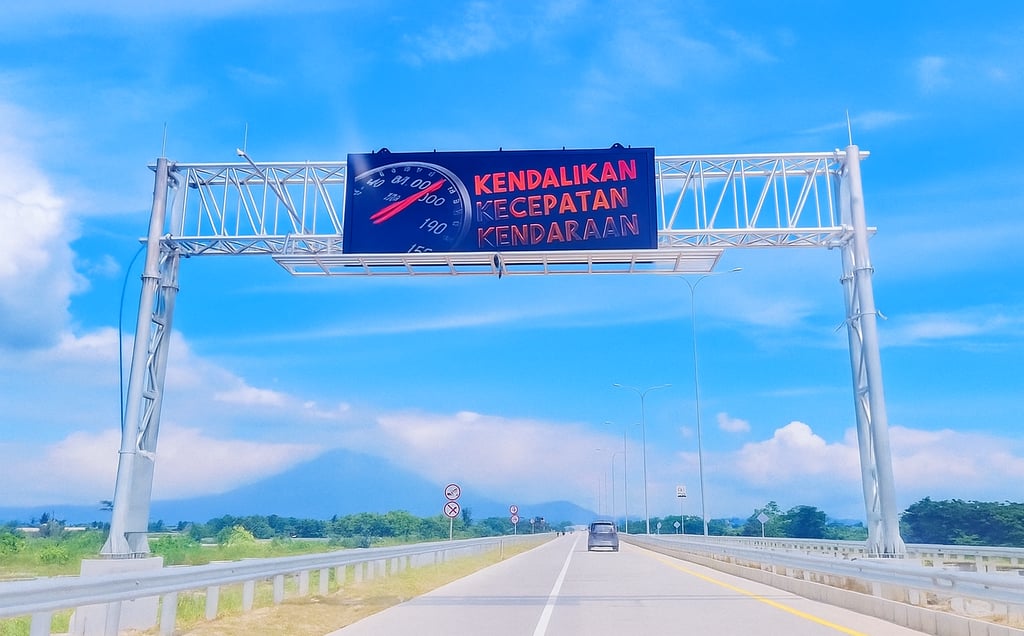
The development of toll road and national infrastructure projects in Indonesia has accelerated significantly in recent years. To support traffic flow and enhance road safety, the use of VMS (Variable Message Sign) has become a crucial component in modern transportation systems. This technology not only functions as a digital information board but also serves as part of an integrated traffic management system.
What Is VMS?
VMS (Variable Message Sign) is an LED-based electronic display board used to deliver real-time information to road users. The messages displayed may include:
Traffic congestion updates
Accident warnings
Traffic diversions
Extreme weather information
Road maintenance notifications
In modern toll road projects, VMS is integrated into the Intelligent Transportation System (ITS) and connected to centralized traffic control centers.
Read Also: The Vital Role of Galvanized Steel in Telecommunication Camouflage Towers
Enhancing Road User Safety
VMS plays a significant role in improving road safety by providing early warnings and real-time updates. Drivers can make faster and more informed decisions, reducing the risk of accidents and secondary collisions.
Supporting Real-Time Traffic Management
Through integration with traffic control centers, VMS enables authorities to manage traffic conditions dynamically. Messages can be updated instantly in response to congestion, accidents, or emergencies.
Part of a Modern National Infrastructure System
As Indonesia continues to modernize its infrastructure, VMS has become a standard component of smart transportation networks. It supports data-driven traffic control and enhances overall system efficiency.
Supporting National Strategic Projects (PSN)
VMS technology aligns with Indonesia’s National Strategic Projects (PSN) by strengthening transportation connectivity and improving road service standards across regions.
Operational Efficiency and Long-Term Cost Reduction
Although the initial investment in VMS technology may be substantial, it provides long-term operational savings by reducing manual traffic control efforts, minimizing accident-related costs, and improving overall traffic efficiency.
Key VMS Specifications for Toll Roads
To perform optimally in toll road and national infrastructure projects, VMS must meet specific technical standards:
High-brightness LED displays
Minimum IP65 protection rating
Corrosion-resistant galvanized steel frame structure
Resistance to strong winds and extreme weather conditions
Remote control system capability
These specifications ensure that VMS systems can operate continuously, 24 hours a day, under various environmental conditions.
Conclusion
The role of VMS in toll road and national infrastructure projects is highly vital. Beyond serving as an information medium, VMS functions as a traffic control tool that enhances safety, efficiency, and rapid response to emergency situations.
In the era of infrastructure digitalization, LED-based VMS with integrated control systems has become the new standard in modern toll road development in Indonesia. Investing in VMS technology is not merely complementary—it is an essential requirement for building safe, intelligent, and sustainable transportation systems.
Head Office
Jakarta Industrial Estate Pulogadung (JIEP)
Jl. Rawa Gelam 3, Blok. M No. 6, Jatinegara, Cakung, East Jakarta - 13930
Telp : +6221 – 460 1088
Fax : +6221 – 4682 3636
Email : info@dutahitajaya.co.id
© 2026. All rights reserved.
Fabrication Plants
Plant Tambun
Jl. Kampung Bulu No.29, Setiamekar, Tambun Selatan, Kab. Bekasi
West Java - 17510
Plant Setu
Jl. Raya Setu No. 09, Telajung, Cikarang Barat, Kab. Bekasi
Plant Cileungsi
Jl. Raya Narogong KM 24.5, Klapanunggal, Cileungsi, Kab. Bogor
West Java - 16820
Plant Cikarang
Jababeka II Industrial Plant, Jl. Industri selatan VIII, Block EE-7H, Pasirsari, Cikarang Selatan, Kab. Bekasi
West Java - 17534
Galvanize Plant
Our Instagram
West Java - 17530