

The Role of Pipe Rack in Maintaining Industrial Piping Organization and Safety
Pipe Rack
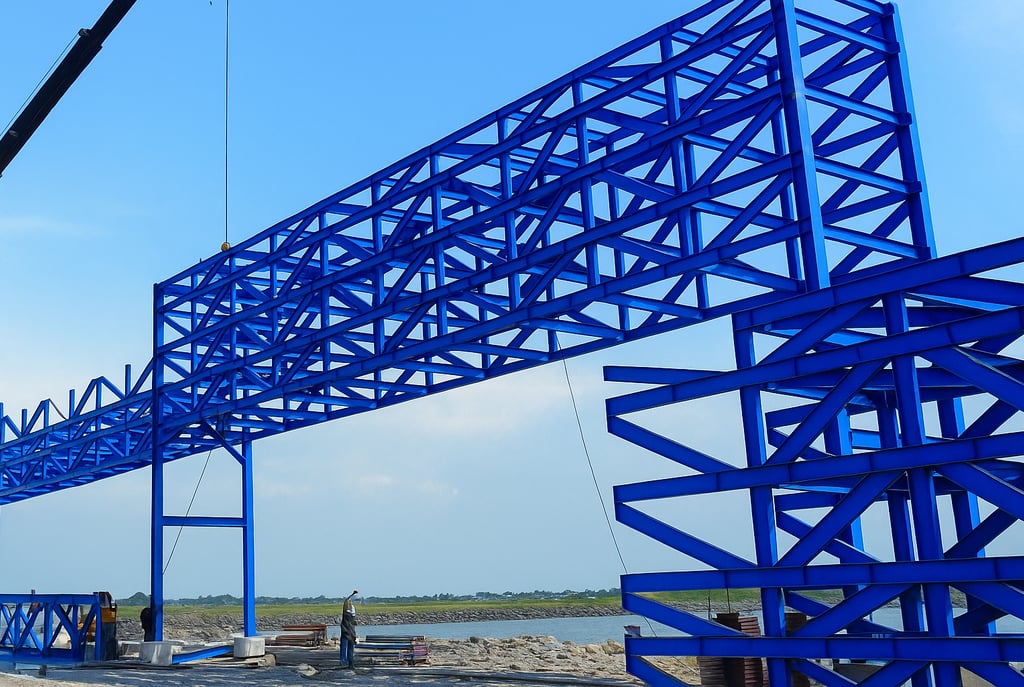
In industrial facilities, piping systems play an essential role in transporting various types of fluids, including water, oil, gas, steam, and chemicals. With numerous piping routes installed throughout a facility, proper arrangement and support systems are required to ensure the installation remains organized, safe, and easy to maintain. One of the structures commonly used for this purpose is a pipe rack.
A pipe rack is a supporting structure designed to carry and organize piping systems within industrial facilities. Generally constructed using steel structures, pipe racks help maintain proper pipe positioning while providing sufficient space for operational activities and maintenance access.
What is a Pipe Rack?
A pipe rack is a structural system used to support and accommodate multiple piping lines. The structure typically consists of columns, beams, bracing, and other supporting elements designed based on the required loads and piping system specifications.
In addition to supporting pipes, pipe rack areas can also be utilized to accommodate electrical cables, instrumentation systems, and certain utility services. This arrangement allows various systems to be installed in a more organized and efficient layout within a single structural pathway.
Read Also: Quality Standards in the Manufacturing of Street Lighting Poles for Infrastructure
The Role of Pipe Rack in Maintaining Industrial Piping Organization
1. Organizing Piping Routes Systematically
Pipe racks provide a structured arrangement for multiple piping lines, allowing each route to be positioned properly according to the facility layout and operational requirements.
2. Optimizing Space Utilization
By arranging pipes vertically and horizontally within a dedicated structure, pipe racks help maximize the available area while reducing congestion in industrial facilities.
3. Separating Different Piping Systems
Pipe racks allow different types of piping systems to be arranged and separated properly, reducing the risk of interference between pipelines and improving overall system management.
The Role of Pipe Rack in Improving Industrial Safety
1. Supporting Pipe Loads
Pipe racks are designed to withstand various loads, including the weight of pipes, fluids inside the pipes, insulation, and additional operational loads. Proper structural design ensures the piping system remains stable and secure.
2. Reducing the Risk of Pipe Damage
A properly designed pipe rack minimizes excessive movement, vibration, and mechanical stress on piping systems, helping to extend their service life.
3. Providing Access for Inspection and Maintenance
The arrangement of pipe racks creates sufficient working space for inspection, repair, and maintenance activities, allowing technicians to perform tasks more safely and efficiently.
4. Helping Reduce Risks in Operational Areas
A well-organized piping system reduces the possibility of leaks, collisions, and operational hazards caused by poorly arranged pipelines.
The Importance of Quality Pipe Rack Fabrication
A well-designed pipe rack requires proper fabrication processes to ensure its performance and reliability. Errors in dimensions, hole positioning, connections, or welding processes can affect installation accuracy and create challenges during field assembly.
Therefore, pipe rack fabrication must be carried out through controlled processes that comply with project drawings and specifications. Quality inspections of materials, dimensions, welding works, and coating applications are essential steps to ensure the structure is ready for installation and operation.
Conclusion
A pipe rack plays an important role in maintaining the organization and safety of industrial piping systems. This structure helps arrange piping routes, optimize space utilization, support pipe loads, and provide better access for inspection and maintenance activities.
With proper engineering design, suitable material selection, and high-quality fabrication processes, pipe racks can support industrial piping systems to operate in a more organized, safe, and efficient manner.
Head Office
Jakarta Industrial Estate Pulogadung (JIEP)
Jl. Rawa Gelam 3, Blok. M No. 6, Jatinegara, Cakung, East Jakarta - 13930
Telp : +6221 – 460 1088
Fax : +6221 – 4682 3636
Email : info@dutahitajaya.co.id
© 2026. All rights reserved.
Fabrication Plants
Plant Tambun
Jl. Kampung Bulu No.29, Setiamekar, Tambun Selatan, Kab. Bekasi
West Java - 17510
Plant Setu
Jl. Raya Setu No. 09, Telajung, Cikarang Barat, Kab. Bekasi
Plant Cileungsi
Jl. Raya Narogong KM 24.5, Klapanunggal, Cileungsi, Kab. Bogor
West Java - 16820
Plant Cikarang
Jababeka II Industrial Plant, Jl. Industri selatan VIII, Block EE-7H, Pasirsari, Cikarang Selatan, Kab. Bekasi
West Java - 17534
Galvanize Plant
Our Instagram
West Java - 17530