

The Importance of BTS Tower Distribution in Expanding Internet Access
BTS Tower
Internet access has become an essential need in modern society. It is no longer used solely for communication, but also for education, business, public services, and entertainment. However, the quality of internet access is still uneven across different regions. One of the main factors influencing this issue is the availability of network infrastructure, particularly BTS towers.
The even distribution of BTS towers is crucial to ensure that all areas—both urban and rural—can enjoy stable internet access. This article discusses why BTS tower distribution is important in achieving equitable internet access and its impact on social and digital economic development.
What Is a BTS Tower?
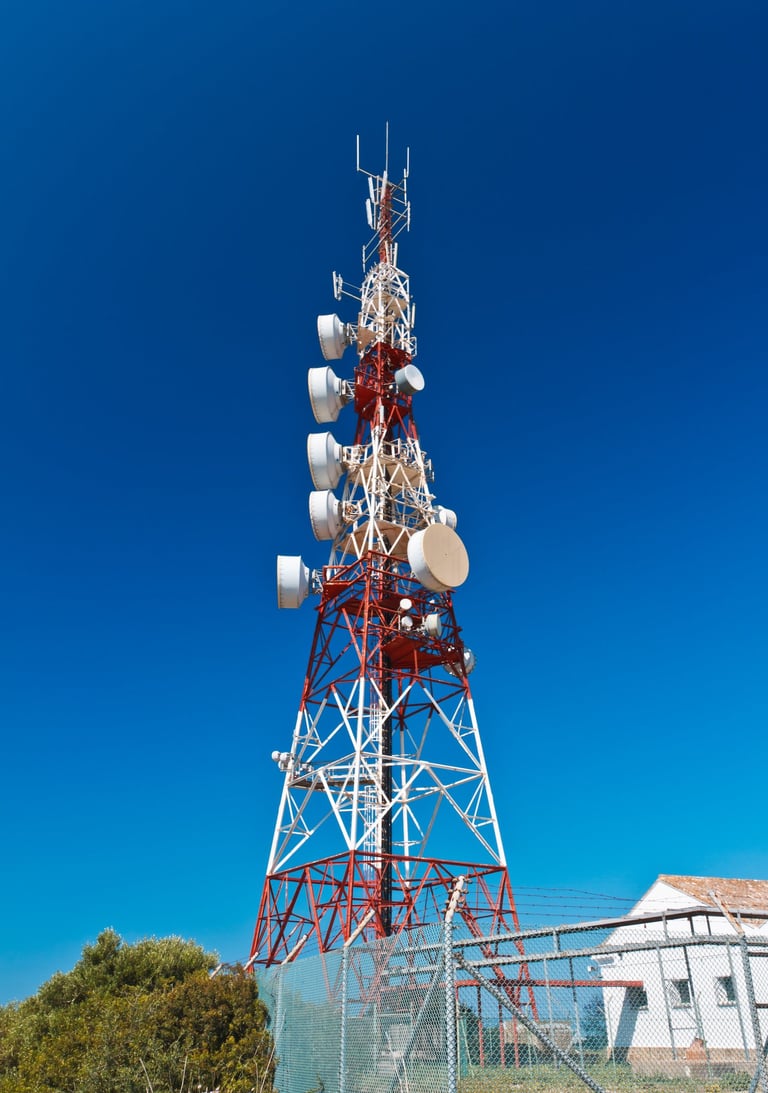
A BTS (Base Transceiver Station) tower is a telecommunications structure used to place BTS equipment. This equipment functions to transmit and receive communication signals between user devices, such as smartphones, and mobile network operators.
BTS towers are typically built with tall structures so that transmitting antennas can cover a wide area. With a strategically distributed network of towers, operators can provide more stable phone and internet services to the public.
Why Is BTS Tower Distribution Important?
1. Expanding Internet Coverage
Even distribution of BTS towers allows cellular signals to reach more areas. Without sufficient towers, many regions would experience weak signals or have no internet access at all.
2. Supporting Digital Inclusion
Equal access to telecommunications infrastructure is essential so that people in remote areas can also benefit from digital technology. With BTS towers spread across regions, the digital divide between urban and rural areas can be reduced.
3. Improving Network Quality
A sufficient number of BTS towers helps reduce network congestion on a single tower. This improves signal quality, reduces connection disruptions, and increases internet speed for users.
4. Supporting the Digital Economy
Stable internet access opens up opportunities for people to run online businesses, conduct digital transactions, and utilize various technology-based services. With evenly distributed BTS towers, digital economic growth can be more widespread.
Read Also : Standards for the Design and Safety of Steel Power Towers in Transmission Networks
Positive Impacts of Even BTS Tower Distribution
1. Improving Access to Education
The internet allows students to access a wide range of online learning resources. With equal network distribution, people in remote areas can also benefit from digital education services.
2. Facilitating Public Services
Many government services are now digital. Proper BTS tower distribution enables people to access administrative services, healthcare, and public information more easily.
3. Enhancing Communication
With strong and stable networks, communication between individuals and regions becomes smoother. This is especially important in emergencies or for coordinating community activities.
4. Encouraging Regional Development
Reliable internet access can increase a region’s attractiveness for investment and business development. Adequate telecommunications infrastructure is often a key factor in regional growth.
Challenges in BTS Tower Distribution
Despite its many benefits, building and distributing BTS towers also faces several challenges, including:
Difficult geographical conditions
High infrastructure development costs
Limited land availability for tower construction
Lengthy permitting processes
To overcome these challenges, collaboration between the government, telecommunications operators, and the private sector is needed to ensure more effective infrastructure development.
Conclusion
The even distribution of BTS towers plays a vital role in supporting equal internet access across regions. With well-distributed telecommunications infrastructure, people can enjoy more stable communication and internet services.
In addition to improving communication quality, equitable BTS tower distribution also has a positive impact on education, public services, and digital economic growth. Therefore, developing and distributing BTS towers is a strategic step toward building inclusive and sustainable digital connectivity.
Head Office
Jakarta Industrial Estate Pulogadung (JIEP)
Jl. Rawa Gelam 3, Blok. M No. 6, Jatinegara, Cakung, East Jakarta - 13930
Telp : +6221 – 460 1088
Fax : +6221 – 4682 3636
Email : info@dutahitajaya.co.id
© 2026. All rights reserved.
Fabrication Plants
Plant Tambun
Jl. Kampung Bulu No.29, Setiamekar, Tambun Selatan, Kab. Bekasi
West Java - 17510
Plant Setu
Jl. Raya Setu No. 09, Telajung, Cikarang Barat, Kab. Bekasi
Plant Cileungsi
Jl. Raya Narogong KM 24.5, Klapanunggal, Cileungsi, Kab. Bogor
West Java - 16820
Plant Cikarang
Jababeka II Industrial Plant, Jl. Industri selatan VIII, Block EE-7H, Pasirsari, Cikarang Selatan, Kab. Bekasi
West Java - 17534
Galvanize Plant
Our Instagram
West Java - 17530