

Steel Utility Pole Fabrication: Precision at Every Stage of Production
Electrical Pole

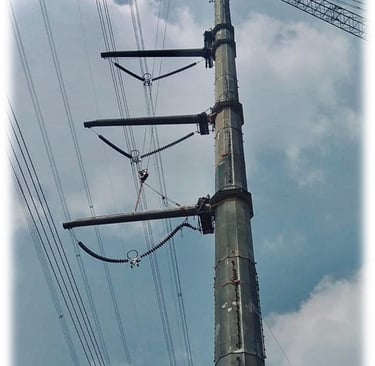
Manufacturing steel utility poles requires a well-planned fabrication process to ensure that every component meets the requirements of the electrical network. From material selection to surface protection, each stage must follow the technical drawings and specifications established for the project.
Precision throughout the production process is essential because utility poles must have the correct dimensions, shapes, and connection configurations according to the design. Errors in individual components can affect the assembly process and subsequent installation at the project site.
Material Preparation Based on Specifications
The fabrication process begins with selecting the type and thickness of steel plates according to the pole design. These details are generally specified in technical drawings, which also include dimensions, structural height, cross-sectional shape, and connection details.
Once the materials are prepared, the steel plates are cut according to the required measurements. Accurate cutting ensures that each component meets the specified dimensions before proceeding to the next production stage.
Component Forming and Joining
For tubular or polygonal utility pole designs, steel plates undergo a forming process to achieve the required cross-sectional shape. This process must maintain accurate dimensions and forming angles to ensure the final components match the design.
After forming, the sections are joined through welding. Both longitudinal seams and connections between pole segments must be completed in accordance with established procedures to maintain fabrication quality.
Creating Holes and Equipment Mounting Brackets
In addition to the main pole body, steel utility poles consist of supporting components such as base plates, connection plates, and mounting brackets for electrical network equipment.
Certain components require drilling to create bolt holes. Their positions and diameters must follow the technical drawings to ensure proper installation of insulators, support arms, and other equipment.
Read Also: What Is Pertashop? A Complete Guide to Its Development and Supporting Infrastructure
Quality Inspection Before Finishing
Once fabrication is complete, each component must undergo inspection to verify its dimensions, shape, hole positions, and welding quality.
These inspections help identify potential discrepancies before the components proceed to the surface protection stage. For certain projects, additional inspections may also be required in accordance with the applicable technical requirements and project standards.
Galvanizing for Corrosion Protection
Steel utility poles are generally installed outdoors, making their surfaces susceptible to corrosion caused by exposure to rain, humidity, and other environmental conditions.
One commonly used protection method is hot-dip galvanizing, a process in which steel is coated with molten zinc. This coating helps protect the steel surface against corrosion and improves the durability of the components during service.
The galvanizing process must comply with the material requirements, component dimensions, and coating thickness specifications established for the project.
Precision Fabrication Supports On-Site Installation
The quality of steel utility poles depends not only on the materials used but also on the accuracy of every fabrication stage. From cutting, forming, welding, and drilling to galvanizing, each process contributes to producing components that meet the design requirements.
Through fabrication based on technical drawings and controlled quality inspections, steel utility poles can be prepared to meet the installation requirements of electrical networks in accordance with project specifications.
Head Office
Jakarta Industrial Estate Pulogadung (JIEP)
Jl. Rawa Gelam 3, Blok. M No. 6, Jatinegara, Cakung, East Jakarta - 13930
Telp : +6221 – 460 1088
Fax : +6221 – 4682 3636
Email : info@dutahitajaya.co.id
© 2026. All rights reserved.
Fabrication Plants
Plant Tambun
Jl. Kampung Bulu No.29, Setiamekar, Tambun Selatan, Kab. Bekasi
West Java - 17510
Plant Setu
Jl. Raya Setu No. 09, Telajung, Cikarang Barat, Kab. Bekasi
Plant Cileungsi
Jl. Raya Narogong KM 24.5, Klapanunggal, Cileungsi, Kab. Bogor
West Java - 16820
Plant Cikarang
Jababeka II Industrial Plant, Jl. Industri selatan VIII, Block EE-7H, Pasirsari, Cikarang Selatan, Kab. Bekasi
West Java - 17534
Galvanize Plant
Our Instagram
West Java - 17530