


Steel Hangars: A Solution for Wide-Span Buildings with Strong Structures
Hangar

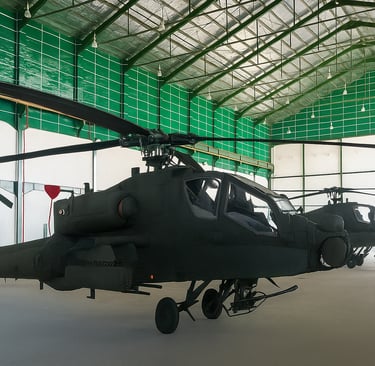
Hangars are buildings designed to accommodate aircraft, vehicles, industrial equipment, and various other operational needs. One of their main characteristics is a spacious interior with few or no columns in the central area, allowing activities to take place more freely.
To meet these requirements, steel is widely used as a primary material in hangar construction. Steel allows the development of wide-span structures through structural systems designed according to the building dimensions and intended use.
Steel Structures Determine Hangar Design and Span
Steel hangar structures can consist of columns, beams, roof trusses, purlins, bracing, and various connection components. Each element plays a role in forming the building structure and transferring loads according to the engineering design.
Steel profile sizes, truss configurations, and spacing between structural frames are determined through engineering calculations. The design must also consider roof loads, wind loads, environmental conditions, and the need for unobstructed interior space.
Accurate dimensioning of each element is essential because all components must work together as an integrated structural system.
Baca Juga : The Use of Steel Fabrication in the Energy and Manufacturing Industries
Steel Fabrication Based on Technical Drawings
Before being assembled at the project site, various hangar components undergo steel fabrication. The process may include cutting steel profiles and plates, drilling bolt holes, assembling components, and welding according to the design.
Each component is manufactured based on technical drawings to ensure that its dimensions, angles, and connection positions meet installation requirements. Dimensional inspections are also necessary to help ensure that components fit together properly during assembly.
In addition to dimensional accuracy, welding quality and material condition must be inspected according to project specifications.
Steel Protection for Long-Term Use
Hangars generally have roof and wall structures exposed to environmental conditions. Therefore, steel surface protection is an important aspect of construction.
Protective coating systems or galvanizing can be applied depending on the component type, environmental conditions, and project specifications. Selecting the appropriate protection system helps reduce the risk of corrosion and maintain the condition of the steel structure throughout its service life.
Structural Quality Starts with Planning and Fabrication
Steel hangars require not only suitable materials but also integrated structural planning, fabrication, and installation processes. Dimensional accuracy and connection quality are essential to ensuring that every component is installed according to the design.
Through a controlled fabrication process, hangar structural components can be prepared to meet building requirements and technical specifications. This supports the construction of hangars that provide spacious operational areas and structures designed for their intended applications.
Head Office
Jakarta Industrial Estate Pulogadung (JIEP)
Jl. Rawa Gelam 3, Blok. M No. 6, Jatinegara, Cakung, East Jakarta - 13930
Telp : +6221 – 460 1088
Fax : +6221 – 4682 3636
Email : info@dutahitajaya.co.id
© 2026. All rights reserved.
Fabrication Plants
Plant Tambun
Jl. Kampung Bulu No.29, Setiamekar, Tambun Selatan, Kab. Bekasi
West Java - 17510
Plant Setu
Jl. Raya Setu No. 09, Telajung, Cikarang Barat, Kab. Bekasi
Plant Cileungsi
Jl. Raya Narogong KM 24.5, Klapanunggal, Cileungsi, Kab. Bogor
West Java - 16820
Plant Cikarang
Jababeka II Industrial Plant, Jl. Industri selatan VIII, Block EE-7H, Pasirsari, Cikarang Selatan, Kab. Bekasi
West Java - 17534
Galvanize Plant
Our Instagram
West Java - 17530