


Steel Fabrication Technologies for Industrial Pipe Rack Construction
Pipe Rack
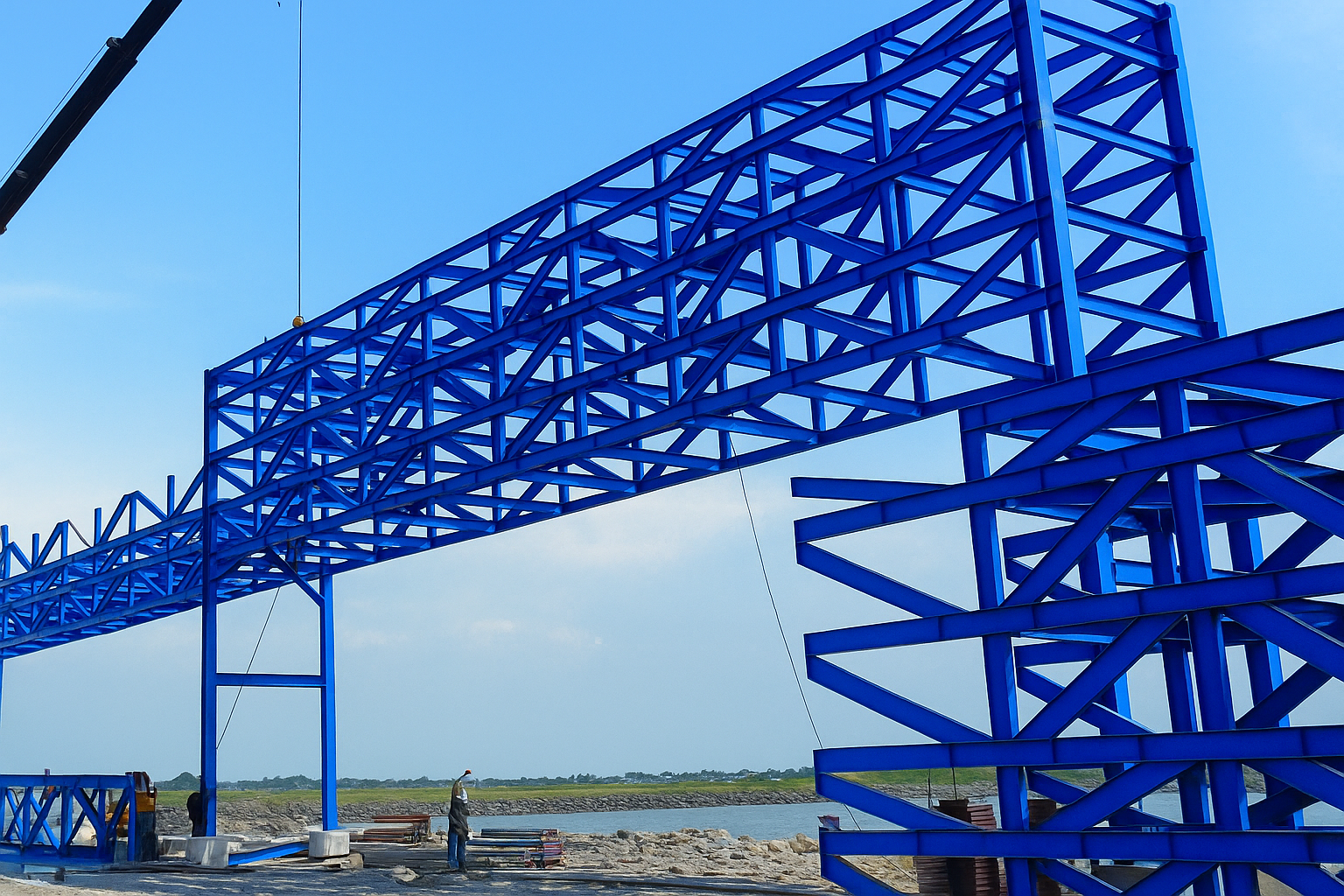
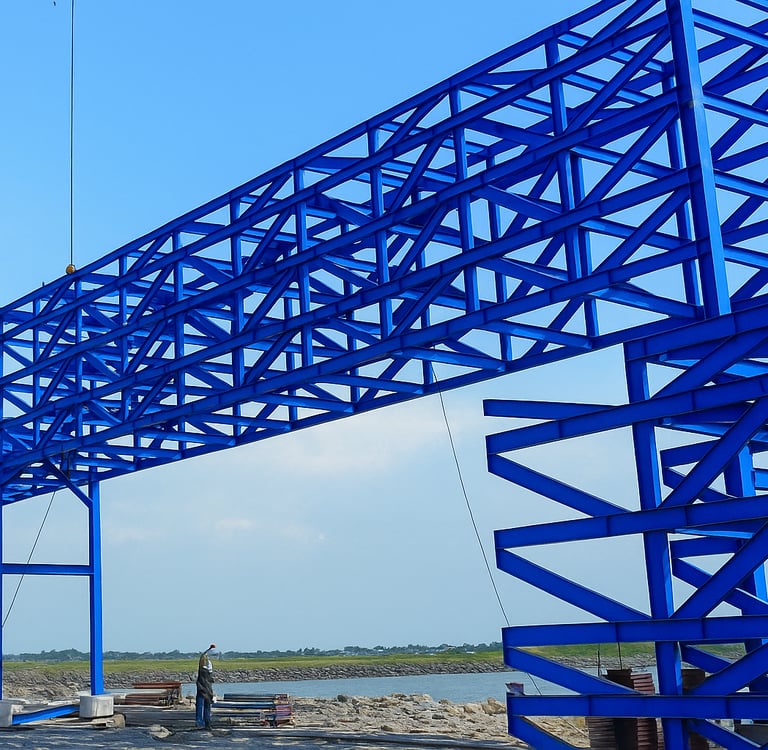
In various industrial sectors such as chemical plants, oil refineries, power plants, and manufacturing facilities, piping systems play a crucial role in distributing fluids, gases, and energy. To ensure that pipelines are arranged neatly, safely, and efficiently, a strong and stable supporting structure is required—commonly known as a pipe rack.
These structures are typically manufactured through steel fabrication processes that utilize modern technologies to ensure strength, durability, and construction precision.
Advancements in steel fabrication technology have enabled the production of high-quality pipe racks, improved production efficiency, and compliance with modern industrial safety standards. This article discusses the key steel fabrication technologies commonly used in the construction of industrial pipe racks.
Definition of Pipe Rack in Industry
A pipe rack is a structural framework designed to support and organize multiple pipelines within an industrial facility. It is usually constructed using structural steel components such as H-Beams, I-Beams, channels, and steel plates, engineered to withstand the load of pipes, cables, and supporting equipment.
In large-scale industrial projects, pipe racks can be extensive and complex, requiring precise fabrication technologies to ensure strong and durable structures.
Read Also: Optimizing Street Lighting with LED Public Street Lighting (PJU) Technology
Precision Steel Cutting Technology
One of the most critical stages in pipe rack fabrication is cutting steel materials according to the dimensions specified in engineering drawings. Modern cutting technologies enable this process to be carried out with high precision.
Common cutting methods include:
CNC Plasma Cutting for high-accuracy steel plate cutting
Laser Cutting for extremely precise and clean cuts
Band Saw Cutting Machines for cutting structural profiles such as H-Beams and I-Beams
These technologies help accelerate production while minimizing dimensional errors that could affect structural integrity.
Welding Technology
Welding is a key process in pipe rack fabrication, as it joins various steel components into a single, robust structure.
Common welding technologies include:
Shielded Metal Arc Welding (SMAW)
Gas Metal Arc Welding (GMAW/MIG)
Flux Cored Arc Welding (FCAW)
Modern welding technologies ensure strong joints capable of withstanding various loads applied to pipe rack structures. Welding is typically performed by certified professionals to meet industry standards.
Forming and Structural Assembly Technology
After cutting, steel components are assembled into structural elements such as columns, beams, and bracing systems. Modern fabrication technologies enable high-precision assembly.
Technologies used include:
Automated drilling machines for bolt hole creation
Hydraulic bending machines for shaping steel materials
Fixture assembly systems to support accurate component alignment
These technologies ensure that each pipe rack component is assembled according to engineering specifications.
Anti-Corrosion Coating Technology
Pipe racks are often used in environments with high humidity or chemical exposure, making corrosion protection essential.
Common coating technologies include:
Hot Dip Galvanizing to apply a protective zinc layer
Industrial coating systems such as epoxy and polyurethane coatings
Sandblasting to clean steel surfaces prior to coating
These treatments enhance corrosion resistance and extend the service life of the structure.
Quality Control and Inspection Technology
To ensure that fabricated pipe racks meet safety and quality standards, various inspection and testing methods are applied throughout the fabrication process.
These include:
Ultrasonic Testing (UT) to detect internal weld defects
Magnetic Particle Testing (MT) to identify surface cracks
Dimensional inspection to verify component accuracy
Strict quality control ensures that pipe rack structures are safe and ready for industrial application.
The Role of Fabrication Technology in Project Efficiency
The use of modern steel fabrication technology provides several advantages for industrial projects, including:
Improved structural precision and quality
Faster production of pipe rack components
Reduced fabrication errors
Greater efficiency in project time and cost
Additionally, fabrication technology enables modular pipe rack construction, allowing for faster installation at project sites.
Conclusion
Steel fabrication technology plays a vital role in the construction of pipe racks used across various industrial projects. From cutting and welding to forming, coating, and quality inspection, each stage contributes to producing strong, safe, and durable pipe rack structures.
Head Office
Jakarta Industrial Estate Pulogadung (JIEP)
Jl. Rawa Gelam 3, Blok. M No. 6, Jatinegara, Cakung, East Jakarta - 13930
Telp : +6221 – 460 1088
Fax : +6221 – 4682 3636
Email : info@dutahitajaya.co.id
© 2026. All rights reserved.
Fabrication Plants
Plant Tambun
Jl. Kampung Bulu No.29, Setiamekar, Tambun Selatan, Kab. Bekasi
West Java - 17510
Plant Setu
Jl. Raya Setu No. 09, Telajung, Cikarang Barat, Kab. Bekasi
Plant Cileungsi
Jl. Raya Narogong KM 24.5, Klapanunggal, Cileungsi, Kab. Bogor
West Java - 16820
Plant Cikarang
Jababeka II Industrial Plant, Jl. Industri selatan VIII, Block EE-7H, Pasirsari, Cikarang Selatan, Kab. Bekasi
West Java - 17534
Galvanize Plant
Our Instagram
West Java - 17530