

Factors Affecting the Quality of Steel Fabrication
Steel Fabrication

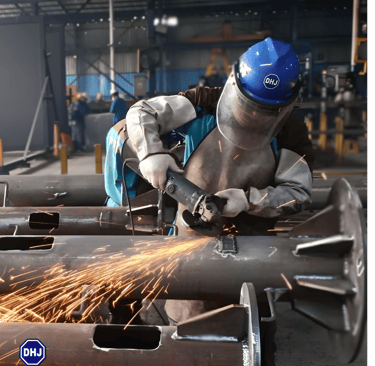
The quality of steel fabrication is a key factor in producing structures that are strong, precise, and durable. Steel fabrication involves several stages, from material selection and cutting to welding and quality inspection. Each stage must be carried out correctly to ensure that the finished product meets the specified requirements and applicable standards.
The following are several factors that affect the quality of steel fabrication.
1. Steel Material Selection
The steel material used has a significant impact on the strength and durability of the final product. The selection of steel grades must be based on project requirements, working loads, and environmental conditions. Using materials that meet the required specifications helps ensure structural safety and achieve an optimal service life.
2. Cutting Accuracy
Steel cutting must be performed according to the specified dimensions and design. Dimensional errors can cause misalignment during assembly and affect the overall quality of the structure. Therefore, using appropriate equipment and accurate measurement methods is essential.
3. Welding Quality
Welding plays an important role in joining steel components to form a strong structure. Welding techniques, operator skills, and the selection of welding methods and parameters must be appropriate for the material type and joint requirements. Weld inspections are also necessary to detect defects that could compromise structural strength.
Read Also: Types of Steel Materials Used in VMS Supporting Structures
4. Dimensional Accuracy and Assembly
Each component must have dimensions and positions that comply with the engineering drawings. Dimensional accuracy helps ensure that all parts fit together properly and reduces the risk of installation errors. Dimensional inspections should be conducted regularly throughout the production process.
5. Quality Control
Quality control (QC) is performed to ensure that every product meets the established technical requirements. Inspections may cover dimensions, surface conditions, weld quality, and material compliance. Consistent quality control helps identify potential manufacturing defects at an early stage.
6. Corrosion Protection
Corrosion can reduce the durability of steel materials, particularly in structures exposed to moisture and aggressive environmental conditions. Applying protective coatings, such as anti-corrosion paint or hot-dip galvanizing, as required, helps protect steel surfaces and extend the service life of the finished product.
Conclusion
The quality of steel fabrication is influenced by material selection, cutting accuracy, welding quality, assembly precision, quality control, and corrosion protection. All these factors must be carefully considered to produce steel fabrications that meet specifications, are safe to use, and offer reliable durability.
A well-controlled production process is one of the key factors in supporting the successful delivery of industrial and infrastructure projects.
Head Office
Jakarta Industrial Estate Pulogadung (JIEP)
Jl. Rawa Gelam 3, Blok. M No. 6, Jatinegara, Cakung, East Jakarta - 13930
Telp : +6221 – 460 1088
Fax : +6221 – 4682 3636
Email : info@dutahitajaya.co.id
© 2026. All rights reserved.
Fabrication Plants
Plant Tambun
Jl. Kampung Bulu No.29, Setiamekar, Tambun Selatan, Kab. Bekasi
West Java - 17510
Plant Setu
Jl. Raya Setu No. 09, Telajung, Cikarang Barat, Kab. Bekasi
Plant Cileungsi
Jl. Raya Narogong KM 24.5, Klapanunggal, Cileungsi, Kab. Bogor
West Java - 16820
Plant Cikarang
Jababeka II Industrial Plant, Jl. Industri selatan VIII, Block EE-7H, Pasirsari, Cikarang Selatan, Kab. Bekasi
West Java - 17534
Galvanize Plant
Our Instagram
West Java - 17530